

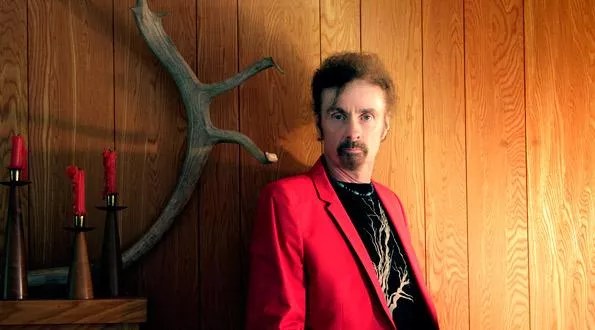
By combining an old–school dedication to craft with a certain hipster/counter-culture feel — both in content and in personal appearance — T. Coraghessan or “T.C.” Boyle has built a passionately devoted following for his novels and short stories.
His most popular works, such as Tortilla Curtain and Road to Wellville, generally combine themes of immigrant or outsider identity with concerns about environmental sustainability, most of them leavened with his trademark ironic humor.
Boyle’s latest book, San Miguel, breaks new ground for him and harkens back to the age of the classic historical novel. Telling the story of a consumptive woman, her driven rancher husband, and their family on a windswept island off the California coast with more sheep than people, San Miguel is a hauntingly written tale of human aspiration and limitation, in a style at once spare and evocative.
Boyle appears Saturday, Feb. 16 in Telfair Square as part of the Savannah Book Festival. We spoke to him last week.
You’re one of the few novelists left who really seems to care about the art of crafting a sentence. So many so–called novels today read more like auditions for a screenplay.
T. C. Boyle: I’m just doing what comes naturally. If certain visual devices and methods end up stealing some of the market, that’s the way the world goes. There’s nothing I can do about it. I’m an artist, just like someone who’s a painter or a musician. I’m going to keep doing what I do whether or not anybody cares.
There’s a story by Franz Kafka called “A Hunger Artist.” The protagonist systematically starves himself and sets a world record for the longest time going without eating. No one knows and no one cares. We literary writers are sort of in that position. I’m not complaining!
And you can never tell when things will come around again. With the advent of the telephone and television and things like that, people pooh–poohed it, saying the tradition of letter writing has gone away.
Well, now people don’t write letters, but they do text each other all the time. So in a way, writing has come back.
You write a lot about American identity and what it means. Your most popular work, Tortilla Curtain, deals with Latino immigration. At the time that was released in the mid–‘90s there was so much media hype about Latino culture, with Ricky Martin and Jennifer Lopez, etc. Fast forward and we’re in much worse shape with regards to tolerance of other cultures. You were prescient then; are we ever going to deal with this?
T. C. Boyle: We have and we do. And we always do. There’s a novel where the immigrants who are at the time considered ignorant and funny–looking are all Swedes! So it all comes around.
The subtext of Tortilla Curtain — and really my obsession, which I write about it every book — is humans as an animal species and our impact on the planet.
Animals move where the resources are. People from third world countries who immigrate here are coming to where the resources are. Unfortunately, there are seven billion people and a finite planet. I don’t have any answers!
For so long Americans could always just go west. My novel Drop City is about a hippie commune that moves to our last frontier, Alaska. Well, that’s all over, too.
Even the new book, San Miguel, deals with that issue, with regards to the importance of shearing the sheep, the poaching of the shellfish, etc.
T. C. Boyle: San Miguel Island is as far as you can go off our continent and still be part of North America. In our time people are feeling so crowded, and they hear nothing but bad news about the environment. We all want to go back to a simpler time, go back to being king and queen of our own island. Of course the island throughout literary history has stood as a metaphor for self–containment.
You’ve flirted with the idea of female points of view in other books, but San Miguel is the first time you’ve really written through the eyes of a female protagonist, isn’t it?
T. C. Boyle: Very definitely. I thought at first I’d be writing the book through both female and male points of view. It’s an experiment for me — I’ve never written a novel without irony like this, and one that’s straight historical novel. I did it as an experiment.
I’m always trying to do something different. I’ve written about historical figures before, but I never tried a long narrative without irony or humor, just a straightforward realistic, historic novel.
Most of the novelists I talk to, especially the ones who found fame a bit quickly, seem pressured to return to what worked the first time.
T. C. Boyle: Everybody’s different and works in different ways. Myself, I don’t see any limits. I don’t think there are any limitations. Anything that appeals can be a story in any mode.
That’s my nature, but experimenting also helps me be productive. I’m always searching for the next story or next form, rather than just be stuck doing the same thing over and over.
T. C. Boyle appears Feb. 16, 1:30 p.m. in the Telfair Academy rotunda. Free and open to the public.
This article appears in Feb 6-12, 2013.