The ability to read is among the most valuable and essential skills a person can possess. Literacy enables people not only to learn and work, but to be empowered and engaged citizens in the communities where they live. Because reading is so fundamental, it is vitally important to ensure that children in schools are receiving effective literacy instruction. And while reading remains one of the top priorities for educators, the system at present is failing students.
According to findings from the National Assessment of Educational Progress, a vast majority of U.S. students do not meet reading standards. Sixty-five percent of fourth graders read below grade level, and the number increases for Black and Hispanic students. While these statistics are harrowing, researchers have hope that with proper, evidence-based instruction, nearly all children can achieve reading proficiency by the end of first grade. This change will take effort beyond the classroom at local, state and national levels, and one man is on a mission to bring science-based reading instruction to classrooms across the country.
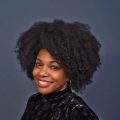
Kareem Weaver is an award-winning educator, administrator and advocate who is championing the literacy cause in America. He is the vice president of the Oakland NAACP and chair of the organization’s education committee. Weaver is also the co-founder and executive director of Full and Complete Reading is a Universal Mandate, which is a nonprofit based in Oakland, California, that is committed to improving student reading outcomes.
“We have been up for about three years now, and I founded [FULCRUM] because the kids can’t read, and I’m trying to do something about it,” said Weaver. “All we do is literacy. We focus on policy at the district level and the state level, providing information. . . We push on universities to make sure that their methods classes are aligned to the science of reading. We support K–12 school systems to make sure that their curriculum, their contracts and their approaches to reading are lined up and make sense to get the most kids reading possible. We support teachers and principals to get professional development in the science of reading, and we bring the community into the process as well.”
The crux of FULCRUM’s advocacy is about promoting science-based reading instruction, which may sound complicated but is very simple in actuality.
“It’s just doing what works for the greatest number of kids,” Weaver said.
There are many ways to teach reading, but research has confirmed conclusively that there’s a particular teaching methodology that has proven to be the most effective. Phonemic awareness, phonics, fluency, vocabulary and comprehension are the five pillars of science-based reading instruction.
“You start with the sounds, attach symbols to sounds, make sense of the symbols, learn the code of those symbols, master it, and then build out your vocabulary. And all along the way, work on kids’ language development. That’s it. It’s really very simple,” he explained. “It’s nothing different than what the federal government said in the Office of Justice Report, the National Reading Panel and the Bilingual National Reading Panel. It’s nothing different than what the American Federation of Teachers put out as the elements of an effective reading program. . . It’s the same stuff. We just label it different things depending on our stage, age and politics. But the science of reading is just getting the greatest number of kids to read and having the materials and training to make that happen.”
Weaver’s literacy advocacy was recently featured in “The Right to Read,” a documentary following a cast of stakeholders engaged in the fight to ensure that young students are empowered with the ability to read. Weaver’s involvement with the film, which is currently screening across the country, happened organically.

“I was just doing the work at FULCRUM and also with the NAACP in Oakland, and a friend of mine asked if I would meet with the film crew. They asked if they could follow me around . . . and I guess they liked what they saw,” said Weaver.
The crew members were inspired by Weaver’s efforts and invited him to contribute more formally to the documentary. He is glad to have been a part of the project, seeing it as a vital opportunity to raise awareness.
“Sometimes it takes a film or a book, or a podcast or a television show, just something besides a newspaper article . . . to get the word out,” he said.
Weaver is so passionate about the cause of literacy because he believes that it is our most important civil right.
“Literacy unlocks everything else. It’s the most important civil right because to access your other rights, you need to be literate — whether it’s voting and understanding what the ballot is saying, whether it’s starting a business, whether it’s your faith and religion and being able to read the scriptures, whether it’s being able to access employment opportunities, whether it’s being able to do the research on the different medical options your considering. In any industry, in any area, a literate person has a better chance of being successful. . . [Literacy] is a basic civil right because it’s the antecedent that activates the other rights. . . it’s a gateway and because of that, we have to marshal our resources towards that end,” said Weaver.
He will be visiting Savannah soon for an upcoming screening of “The Right to Read,” which will be followed by a Q&A. The screening will take place Monday, Nov. 13, at 7 p.m. at the Lucas Theatre. The very next day, he will address local leaders during an engaging “In the Boardroom” session hosted by the Southeast Georgia Leadership Forum. He plans to unite and galvanize community members in the fight to ensure that students in Savannah are receiving effective reading instruction.
“This is one thing we can do together. An opportunity is there for us because we now have the research. We have the knowledge. We just have to be willing to unify and apply it. Unity is not common nowadays, unfortunately, but I’m going to call for it, and I’m going to challenge people to work together. I think our children are worth us coming together. We might not be able to agree on much, but this is one thing across whatever political, cultural, ethnic, linguistic divides — this is the one thing that everybody can rally around. . . I’m going to challenge leaders to be leaders and encourage us to seize the moment,” said Weaver.
He believes that Savannah is one of the cities best suited for impactful change because of its track record for progress.
“Historically, Savannah is one of those places where when we make up our mind to do something, we actually get it done. But the question is, can we actually become resolved to do it? Can we decide that this is going to be on the front burner and not the back burner in terms of time, talent and treasure. . . This has to be a community-led initiative. All stakeholders must take ownership of this to [reach] our kids. It has to be everybody. And if we can’t get along to do this, it says more about us than it does the kids. So that’s why I’m coming to Savannah. It’s a call to arms. I’m going to share some information but mainly ask people to step up and be a part of a unified coalition going forward to get our kids reading.”
He added, “The opportunity is there in the Savannah region. There’s something about the people. They do hard things. We have enough fortitude, and so it makes sense that this would be one of the locations where folks say . . . we’re going to prioritize our kids and we’re going to do whatever it takes to get them reading. It’s not going to happen overnight, but that means stopping the things that haven’t been working and finding the best examples of success around the country and leveraging those models. Savannah can do it,” said Weaver.
He encourages those wanting to promote literacy and critical reading skills in their communities to start at the local level by advocating for teachers and engaging with the school system.
“Teachers need their support. We need clarity. Do we know what’s being taught? Is the instruction, the curriculum, and the professional developments all lined up to the science of reading? Parents can push on that. Community members, businesses, churches, everyone can push on that. . . They should write to their school board representatives and let them know that literacy is a priority and we want [teaching] to be aligned with the science of reading,” he explained.
He also added that community members request the appointment of a person in charge of literacy at the cabinet level to ensure that students are being screened for reading difficulties and dyslexia early so that we can intervene and support them.
“We’re not going to wait for the kids of Savannah to fail,” said Weaver. “The community has to be clear. It’s not later, it’s now.”
Weaver will be speaking at the Southeast Georgia Leadership Forum’s upcoming “In the Boardroom” session on Tuesday, Nov. 14 at the Charles H. Morris Center. Tickets are available at southeastleadershipforum.com/event/in-the-boardroom-with-kareem-weaver/.
This article appears in Connect Savannah | November, 2023.